How to Use the Pastel Stickss in My Art Supplies
Where to Starting time?
I have been using soft pastels (and some hard pastels) for near fifteen years at present. There are several reasons they are my medium of pick, with their pure colour and versatility being loftier up at that place. Personally, I practise not employ oil pastels but, depending on what you lot want to achieve, they are usually very distinctive.
There is no dubiety that the number of pastels on the market today make information technology very hard to know where to get-go – color, cost, function – it can all be quite overwhelming.
And so here is my very basic road map of which style to get when spending your money! First things start – what's what?
Soft Pastels – these are composed of pigment, water and a smaller amount of chalk or artificial binder. The soft texture of these pastels tin can create smooth, smudgy lines and intense colour. Soft pastels cannot be mixed on a palette and for this reason many artists use an extensive range of colours.
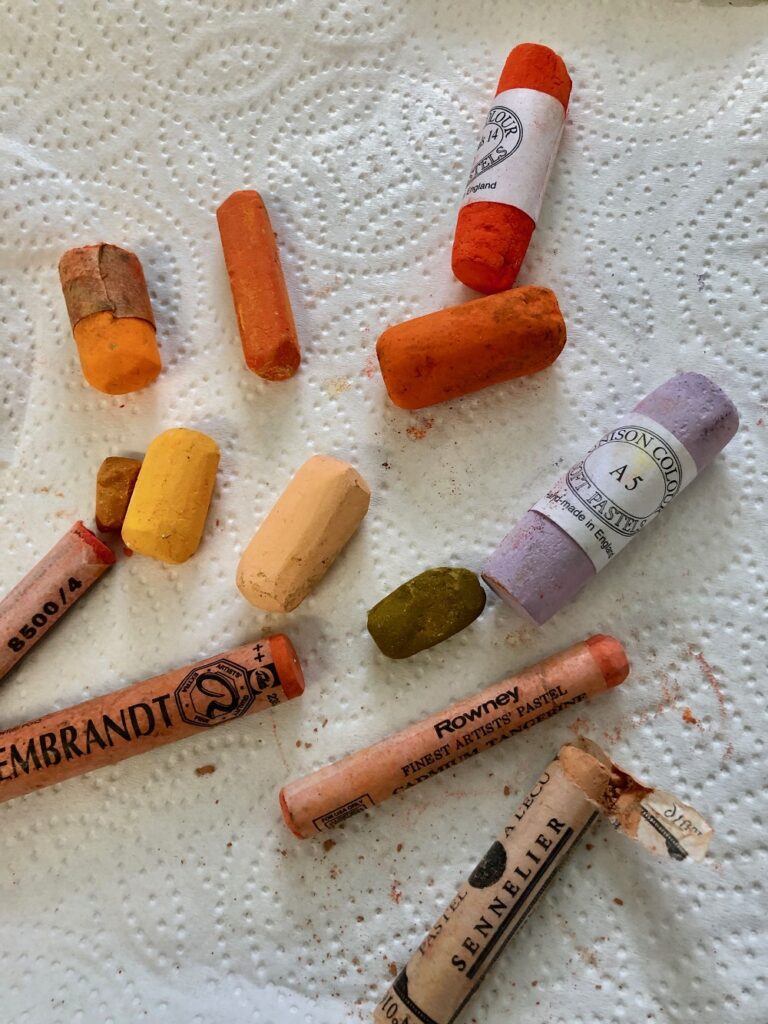
Nearly soft pastels come in sticks – long to short, fat to thin, round to square.
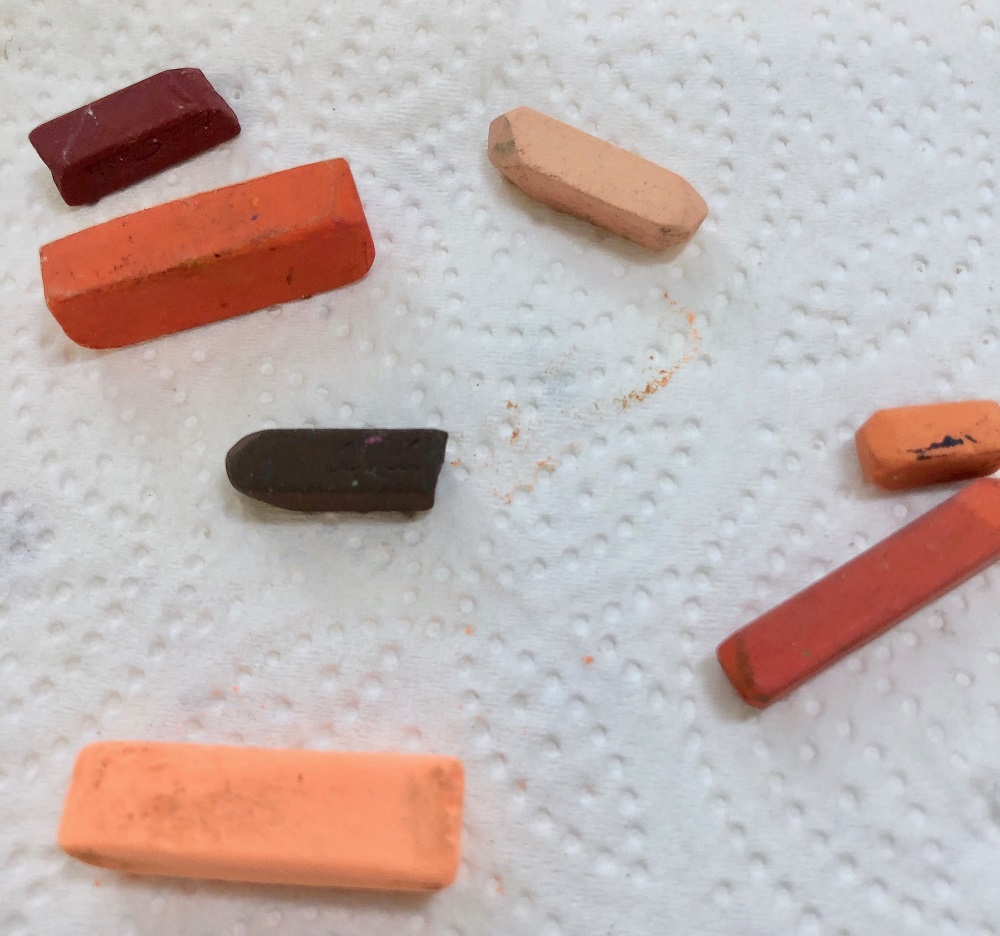
Hard Pastels – are drawing sticks fabricated of pigment, water and chalk. Difficult pastels create precipitous, vivid lines on light and night papers. Some hard pastels can be sharpened, although they tin't hold a fine point similar a pencil.
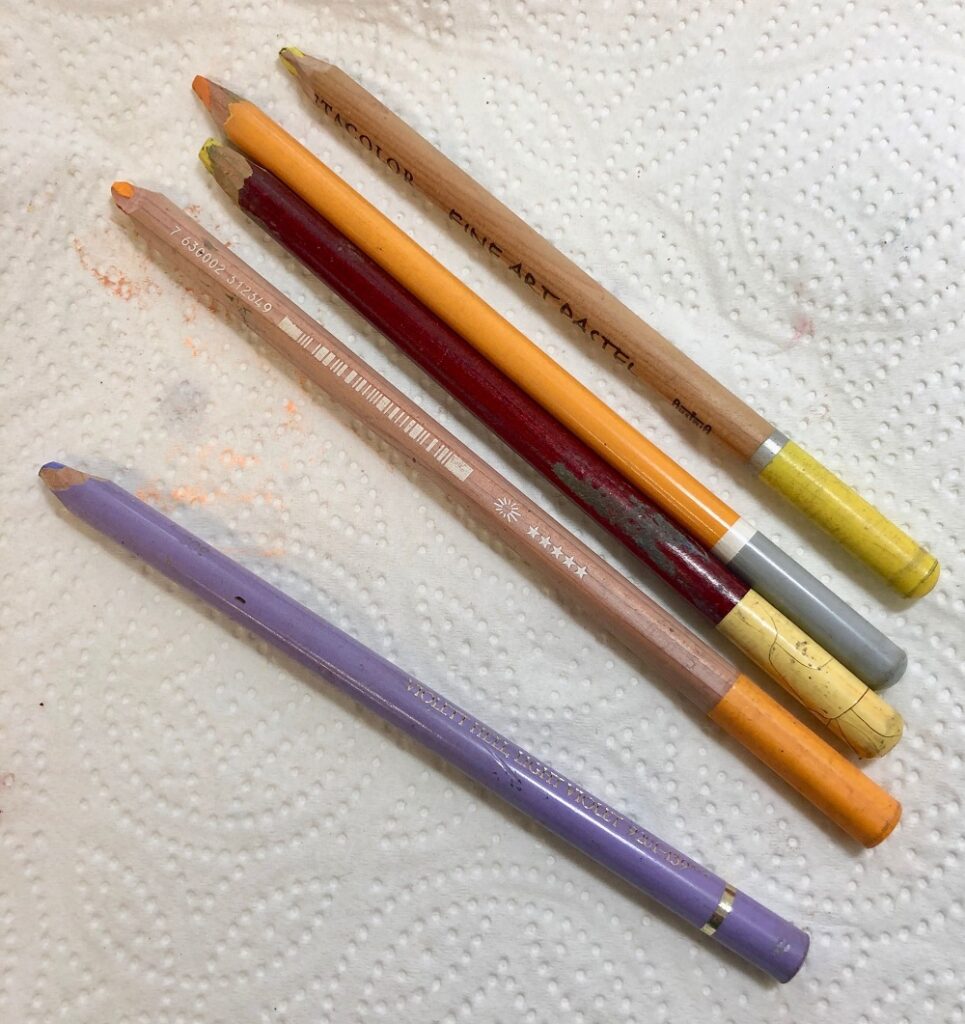
Pastel Pencils – you can acuminate a pastel pencil with a arts and crafts knife or sharpener. Pastel pencils are suitable for sharper, detailed drawings with a pastel expect.
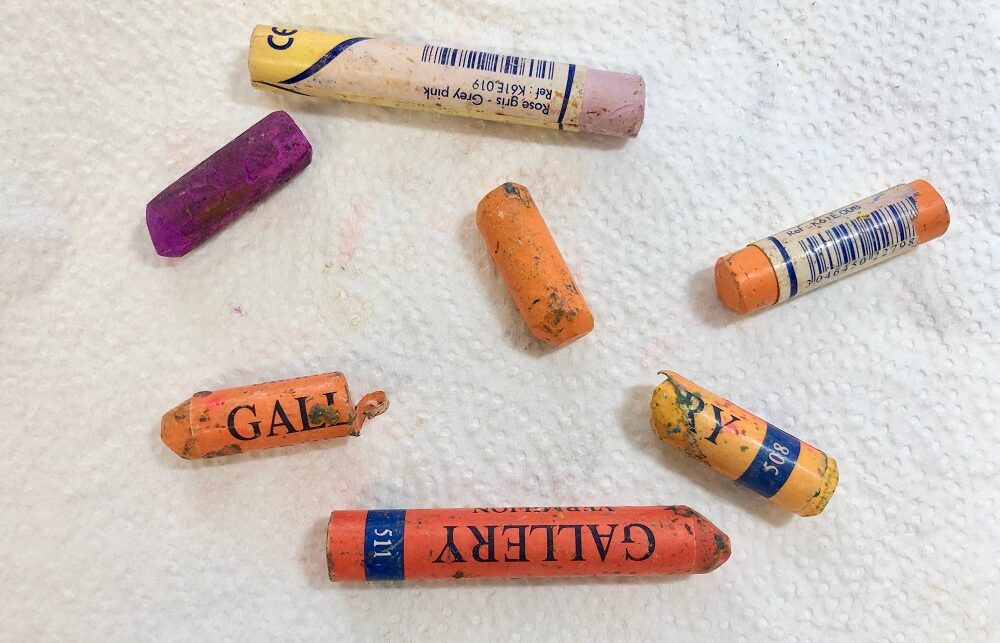
Oil Pastels – These pastels use wet binders, such equally oils, to collect the pigment into a solid stick. Oil-based colours are mostly more intense. Due to the wet nature of the medium, it is also possible to mix oil pastels.
Why I use Soft Pastels:
Soft pastels contain more paint and less folder compared to difficult pastels and pastel pencils. This means the colours are more vibrant and intense and it's this quality that draws so many artists to utilize them.
Because of their soft nature, it's extremely easy to apply lots of colour quite quickly to the newspaper. Beingness so intense and opaque, the colours volition embrace nighttime surfaces without losing their vibrancy.
Soft pastels are also the easiest to blend, the easiest to layer colours on top of 1 some other and will cover larger areas the almost quickly.
Confusingly some soft pastels, for example Rembrandt, are a harder blazon of soft pastel. Unfortunately, the shape of the pastel gives no clue to it's softness so the merely way to actually become to tell the difference is to effort out a variety of makes.
As you can see from the diverseness of pastels bachelor, the color ranges for pastels are all-encompassing. The main reason for this is that, unlike pigment, you really don't mix pastels to lighten, darken or change hue. You tin can do some optical mixing with layers (or blending). Very oft picking the advisable pastel stick from within the right colour range will achieve what y'all need.
Creating Different Effects with Soft Pastels:
It is often said that 'you depict' with pastels, y'all do not paint! I personally disagree with this. There are And then many means a soft pastel stick tin can be used. Hither is a very small range of marks to show you what I mean.
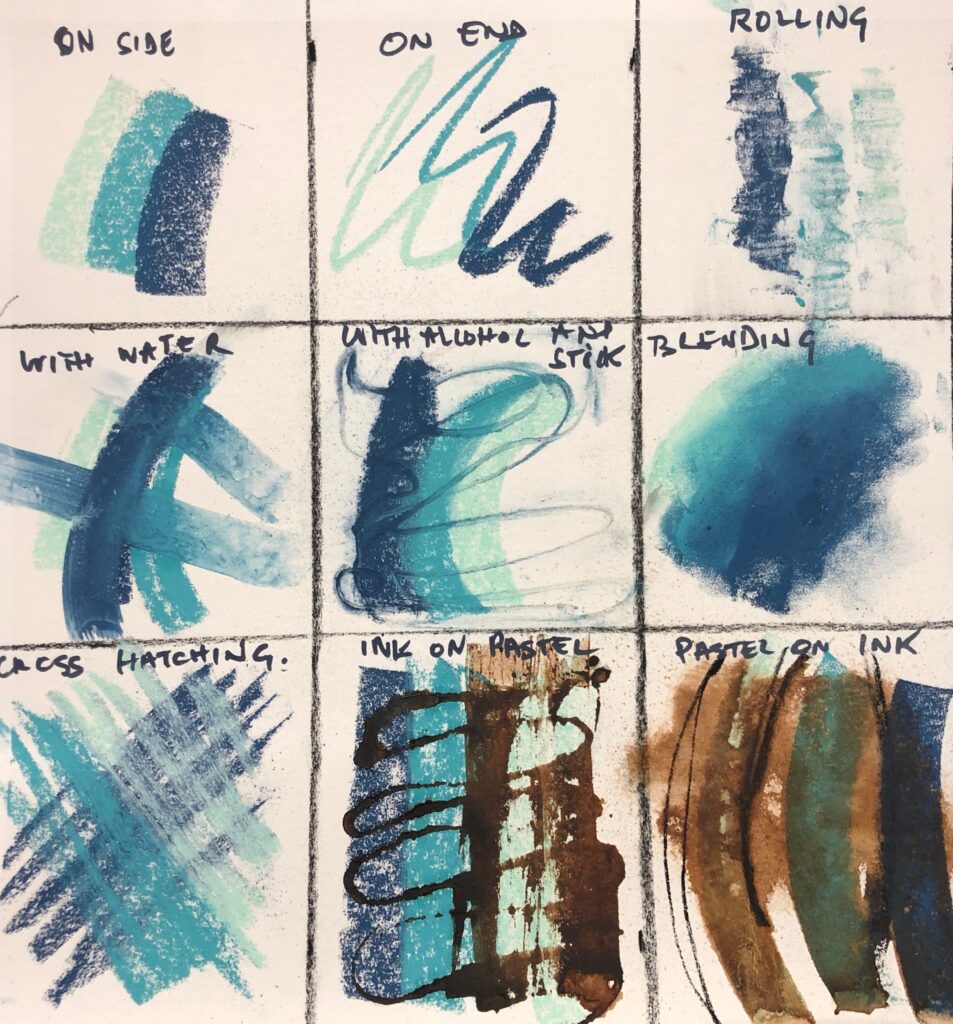
Water or pure booze tin be used to 'pigment' with the pastel, provided the pastel is soluble (some are not) and the substrate you are working on tin can accept liquid without disintegrating.
And then there is a lot to think about moving frontwards with pastels.
What to Buy?
As I've said my personal weapons of option are soft pastels with some hard pastels thrown in. Unison, Rembrandt and Sennelier accept many pastel sets (including starter and half stick sets). With whatsoever of the makes information technology can exist very helpful to get a colour chart to guide you forth your style!
A very practiced starting bespeak might be the Rembrandt soft pastel basic starter set or the Unison soft pastel half stick landscape ready.
As a general rule, higher priced soft pastels tend to accept more pure paint and there are obvious benefits with that come with that.
Each make and type of pastel will feel slightly different. Different ranges of colour, more or less pigment, more or less soft, different shapes and then on. Pastel pencils are a similar story in terms of choices.
There are no like shooting fish in a barrel answers in terms of choices to brand when yous are starting out. Sometimes going on a pastel workshop can give you the opportunity to handle and experiment with a range of makes and types.
My first soft pastels were a beginner box of Rembrandts and the landscape ready of Unisons. These were suggested by the artist who was leading a painting holiday I went on. And 13 years on they are nonetheless my 'go to' makes.
One of the first things I do on getting new pastels is break them in half. This gives me more options in terms of varied marker making and also makes it easier to use the pastel on its side.
Some other consideration is what newspaper, sandpaper or board to piece of work on. My favourite is heavy duty watercolour paper with gesso. I hear good things nigh Clairefontaine Pastelmat, and Sennelier Pastel Carte, as well equally Ampersand Pastelbords and Colourfix Paper. And then again, information technology's useful to try out various surfaces to run across what suits y'all all-time. Y'all could paint the same painting on each of the unlike surfaces and detect unlike challenges and different results.
An Example of Pastels at Piece of work:
Beneath I demonstrate some of the ways of using hard and soft pastel in a painting, using a 3-phase procedure. I am working on watercolour paper with a light clear gesso underpainting, using the brands Unison, Rembrandt and Conte.
Phase ane: Inks and Soft Pastel
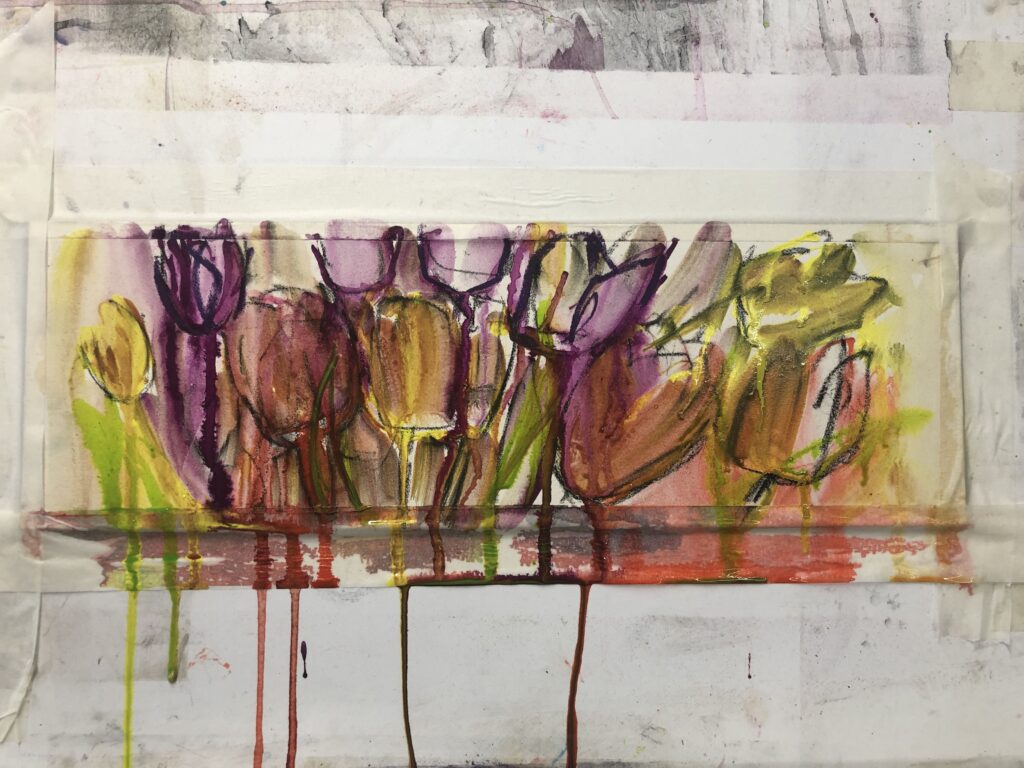
Stage 2: Hard Pastels for marking making lines etc. and Soft Pastel to block in
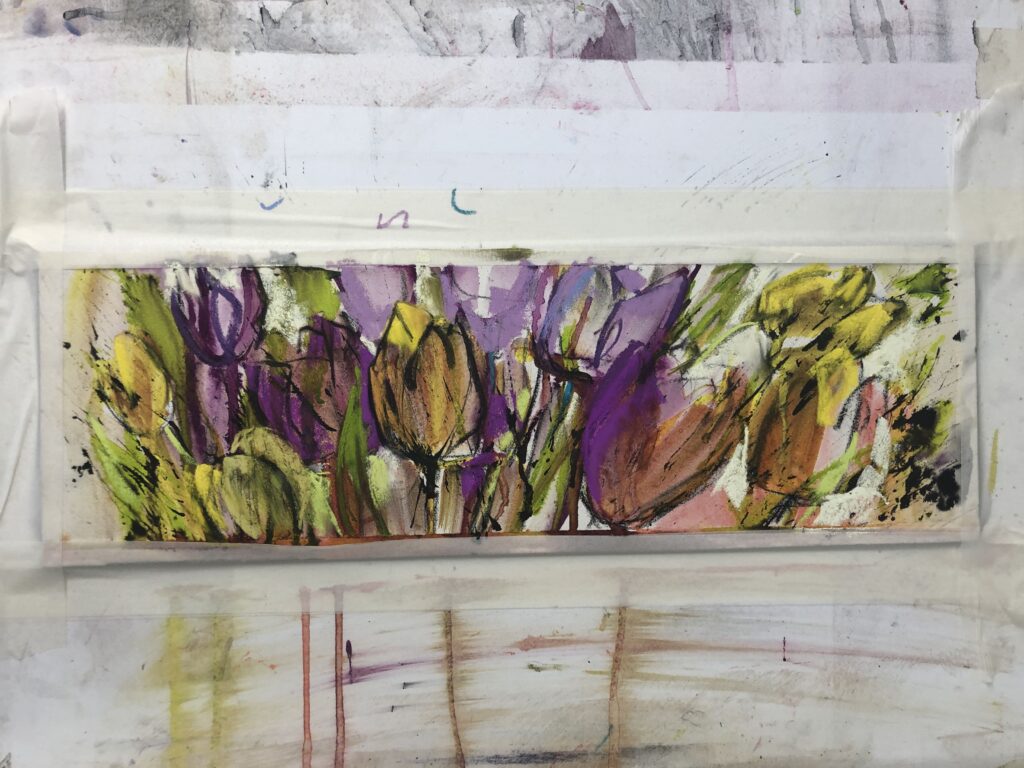
Stage 3: Concluding layer of entirely Soft Pastel used for lines, blocking in and a lilliputian blending.
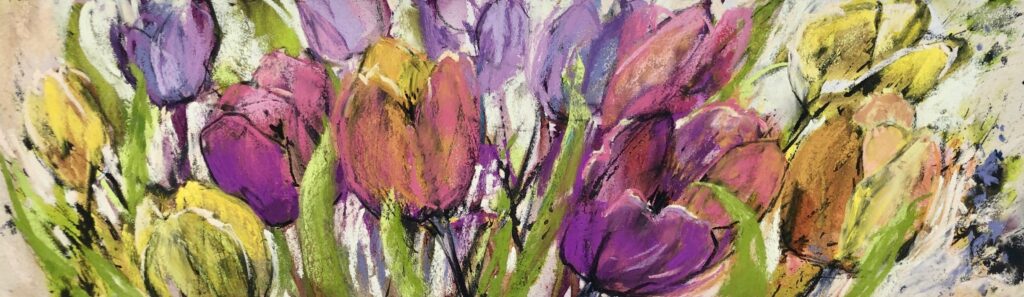
So really there is merely one thing to exercise. Play, mix, experiment. Try and get your easily on a diversity of pastel surfaces and pastels themselves. Mix things about and see what works and what does not. Effort moving the pigment well-nigh with h2o or pure alcohol or mix in with charcoal.
Simply most importantly, have fun!
Judy Tate has been drawn to soft pastels for well-nigh of her painting life. She followed a structured learning with The Open College of Arts and attendance at a wide variety of workshops in unlike mediums and techniques. In the terminal decade Judy now focuses almost entirely on soft pastels with some mixed media. You can discover out more well-nigh Judy on her website: world wide web.judytateartist.com
Source: https://www.artsupplies.co.uk/blog/the-difference-between-soft-hard-and-oil-pastels/

Postar um comentário for "How to Use the Pastel Stickss in My Art Supplies"